December 7, 2025 | www.EndTimesWatch.blog | River Wilde
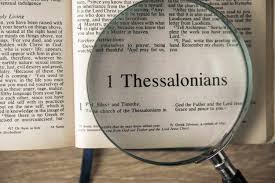
In the bustling port city of Thessalonica, a young church was consumed with excitement about Christ’s return. They had received the gospel with joy, and Paul’s teaching about the resurrection and the Lord’s coming had captured their imagination. But something had gone wrong. Instead of inspiring faithful living, their expectation of Christ’s imminent return had produced chaos.
Some believers had quit their jobs. Others were living off the generosity of fellow Christians while spending their days in anxious speculation about when Jesus would appear. The community was becoming unsustainable, and their testimony in the city was suffering.
Paul’s response to this crisis offers a surprising—and much-needed—corrective for modern believers who find themselves exhausted by years of watching and waiting for the end times.
The Problem in Thessalonica
The Thessalonian church had become obsessed with Christ’s return to the point of dysfunction. Second Thessalonians reveals that some were “walking disorderly, working not at all, but are busybodies” (2 Thessalonians 3:11, KJV). They had apparently reasoned that if Christ was coming back any day, there was no point in working, planning, or investing in ordinary life.
This wasn’t just a theological error—it was destroying the church’s witness and burdening faithful believers who had to support those who refused to work.
Paul’s Radical Prescription: Settle Down
Paul’s advice seems almost anticlimactic for people expecting the world to end: “Study to be quiet, and to do your own business, and to work with your own hands” (1 Thessalonians 4:11, KJV).
Let that sink in. To a church electrified with end times fervor, Paul essentially says: Calm down. Mind your own business. Get a job.
This wasn’t a denial of Christ’s return—Paul himself taught them about it. Rather, it was a recalibration of what faithful expectation actually looks like. The Greek word translated “study” (philotimeomai) means to aspire to something, to make it your ambition. Paul is saying: make it your goal to live a quiet, productive, ordinary life.
Why This Matters for Us Today
For believers who have spent years—perhaps decades—in heightened anticipation of the rapture or Christ’s return, Paul’s words to the Thessalonians offer liberating wisdom.
Readiness doesn’t require constant intensity. Many Christians have burned themselves out trying to maintain a perpetual state of urgent expectation. They’ve felt guilty for planning ahead, pursuing education, or making long-term commitments because “Jesus might come back tomorrow.” But Paul’s advice suggests that faithful waiting includes normal, productive living.
Ordinary faithfulness is spiritual faithfulness. Working with your hands, providing for your family, being a good neighbor, and contributing to society—these aren’t distractions from spiritual readiness. They are spiritual readiness. The servant who is found faithfully doing his work when the master returns is the one commended, not the one who abandoned his post to watch the driveway.
A quiet life is a powerful witness. Paul adds that this lifestyle is meant “that ye may walk honestly toward them that are without, and that ye may have lack of nothing” (1 Thessalonians 4:12, KJV). When Christians live productive, generous, honest lives in their communities, they demonstrate the credibility of their faith. When they quit working and become burdens or busybodies, they undermine the gospel’s reputation.
The Tension We Must Hold
Paul’s teaching creates a healthy tension: we genuinely believe Christ could return at any moment, yet we live as if we’ll be here for decades. This isn’t hypocrisy—it’s wisdom.
The early church held this tension beautifully. They expected Christ’s return, yet they planted churches, wrote letters for future generations, trained leaders, and made plans. Paul himself made strategic travel plans, sent Timothy on long-term assignments, and told Titus to appoint elders in every city—all while believing Christ could return in his lifetime.
This is the biblical model: live with eternal perspective while fully engaging in temporal responsibilities.
What “Settling Down” Looks Like Today
For the modern believer weary from years of watching, Paul’s advice offers practical relief:
Work diligently at your job. Your employment isn’t a distraction from spiritual life—it’s part of it. Do excellent work. Be reliable. Earn your living honestly.
Invest in relationships. Build friendships. Love your family well. Be present with people rather than always mentally checking out to scan prophecy websites.
Contribute to your community. Be a good neighbor. Serve in practical ways. Let people see that your faith makes you more engaged with the world, not less.
Make reasonable plans. Save for retirement. Pursue education. Plant trees you may never sit under. This isn’t denying Christ’s return—it’s the wisdom of Proverbs combined with the hope of the gospel.
Mind your own business. Stop obsessing over speculative prophecy timelines and date-setting. Stop judging other believers for not sharing your level of end-times focus. Do your own work before God.
The Freedom in Faithfulness
Perhaps the most liberating aspect of Paul’s teaching is this: you don’t have to live in constant crisis mode to be ready for Christ’s return. The kingdom of God advances through faithful people living faithful lives in ordinary circumstances.
The Thessalonians thought their obsession with Christ’s return was spiritual maturity. Paul lovingly corrected them: maturity looks like steady, quiet, productive faithfulness. It looks like getting up in the morning, doing honest work, loving the people around you, and trusting God with the timing of all things.
This is the sustainable spirituality that can last for years, even decades, of waiting. It’s not dramatic, but it’s deeply faithful. And when Christ does return—whether today or in another year—He will find His servants doing exactly what He called them to do: working faithfully in the place He put them, loving Him and loving others, until He comes.
The irony is beautiful: in telling anxious believers to settle down and work, Paul gave them the very key to joyful, sustainable readiness. Perhaps we need to hear the same message today.
Discover more from The Gospel of Jesus Christ
Subscribe to get the latest posts sent to your email.


great post, very helpful & level-headed, and I needed to hear it.
👉 “….mentally checking out to scan prophecy websites.”
LOL, busted. ❤️
LikeLiked by 1 person